
 +380675119928
Cattle Leather Topography: Main Hide Areas
When a maker or manufacturer buys natural leather, the first things they usually check are color, thickness, texture and price. That makes sense. But there is one more point that directly affects the final product: leather topography. In simple words, this means understanding which part of the cattle hide the leather comes from.
The same cattle hide does not have the same structure across its entire surface. The central part behaves differently from the sides. The front area is not the same as the back. A narrow strip along the spine may be dense, but not always suitable for large parts. That is why the bend, neck, bellies, croup area, spine strip, whole hide and side leather have different roles in production.
At V-Center, we often see that choosing the wrong hide area can cost more than expected. The leather itself may be good, but it may not match the product. A belt needs density and stability. A soft bag needs flexibility and a more relaxed hand. If these tasks are mixed up, the product may turn out too stiff, too weak, or unstable in use.
That is why cattle leather topography should not be treated as dry theory. It is a practical tool for cutting, purchasing and production.
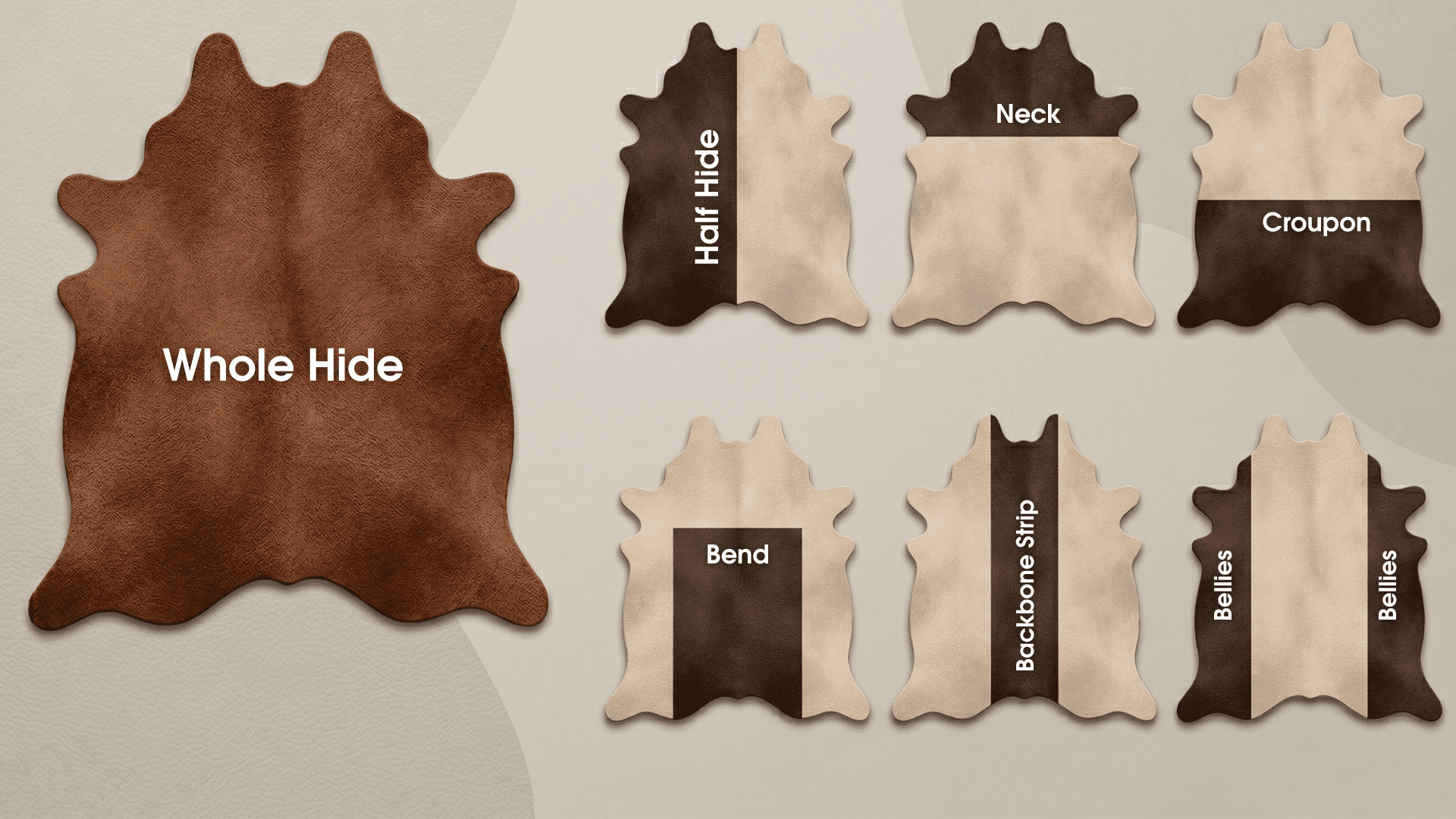
- What Leather Topography Means?
- Whole Hide: When Maximum Area Matters
- Side Leather: A Practical Format for Production
- Bend: The Most Stable Part of the Hide
- Bellies: Softer Side Areas
- Neck: Natural Texture and Flexible Character
- Croup Area: Dense Rear Part of the Hide
- Spine Strip: Narrow but Dense
- How Topography Affects Cutting?
- How to Choose a Hide Area for a Product?
- Why Topography Matters When Buying Leather?
- Practical Takeaway
- FAQ: Cattle Leather Topographic Areas
What Leather Topography Means
Leather topography is the division of a hide into separate areas that differ in density, thickness, flexibility, strength and behavior during work. These differences are natural. Different parts of the animal’s body move differently, carry different loads and have different tissue structure. This is why leather from the back is usually denser, the belly areas are softer, and the neck can have natural wrinkles, folds and uneven thickness.
A hide is not a perfectly uniform technical sheet. It is a natural material with its own structure. Some areas hold shape better. Some areas work better on bends. Some parts have a more expressive natural grain. For a manufacturer, this matters from the first cut.
One piece of leather can make a strong belt, but that does not mean it will be perfect for a large soft bag panel. A softer, more elastic area can work beautifully for clothing or lining, but it may perform poorly in a strap-based construction.
So when we talk about natural leather for footwear, leather goods, furniture, car interiors, belts, briefcases or handmade products, it is not enough to choose only the leather type. The hide area matters as well.
Whole Hide: When Maximum Area Matters
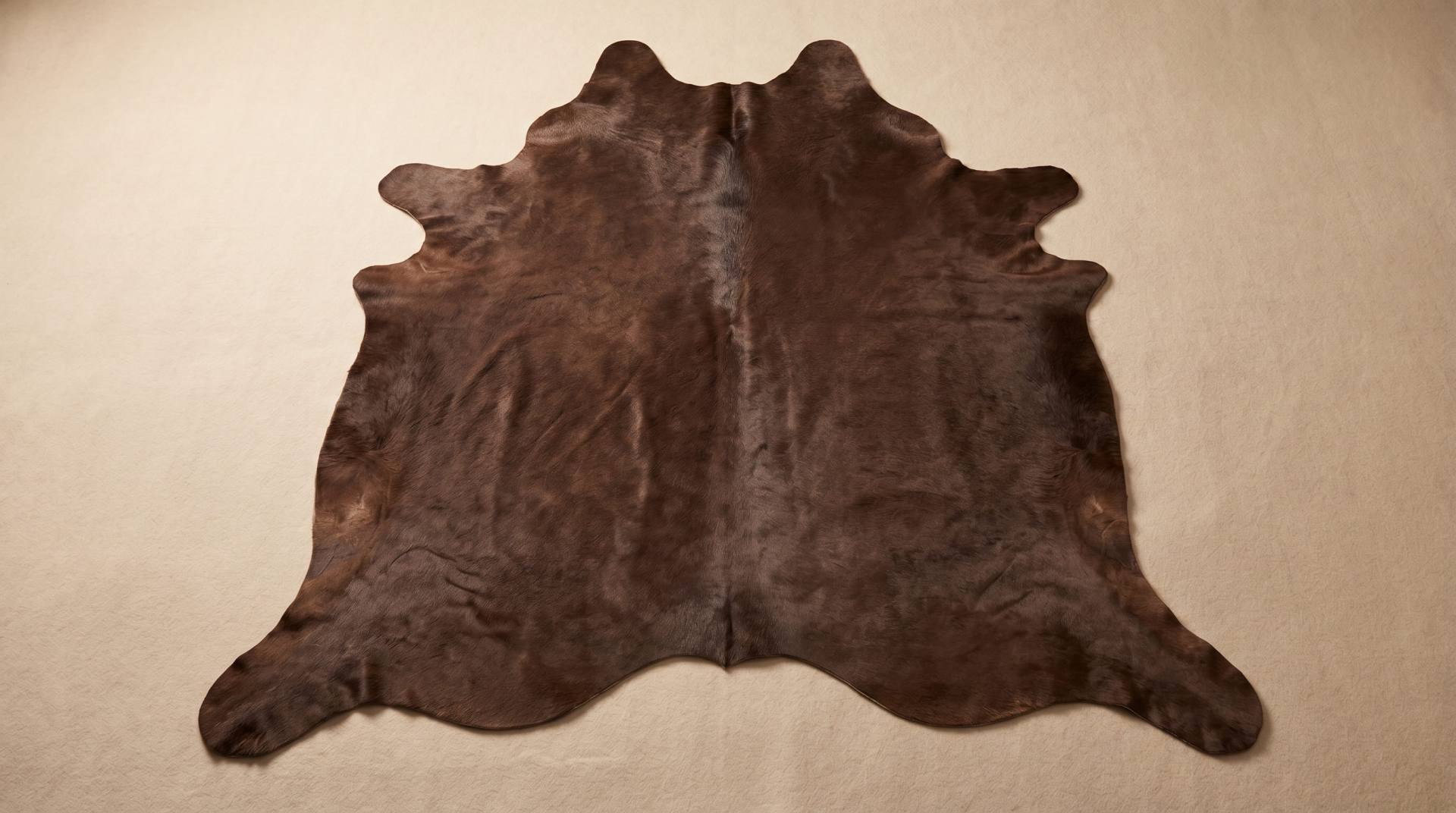
A whole hide is a fully processed animal hide that has not been divided into separate parts. It keeps its natural shape, offers the largest surface area and contains several zones with different behavior.
Whole hides are often chosen when large cutting areas are needed. This may include furniture, automotive interiors, large leather panels, decorative elements, large bags or products where wide parts are required. This format is convenient for workshops and factories that arrange their own cutting patterns and want more control over material use.
But a whole hide should be handled carefully. It is not realistic to expect the entire surface to behave the same way. The central part will usually be more stable, the belly areas will be softer, and the front area may show natural wrinkles. A skilled maker does not cut all parts randomly. They decide which area should be used for strong structural details, which area can work for softer parts, and which pieces are better left for smaller elements.
Side Leather: A Practical Format for Production
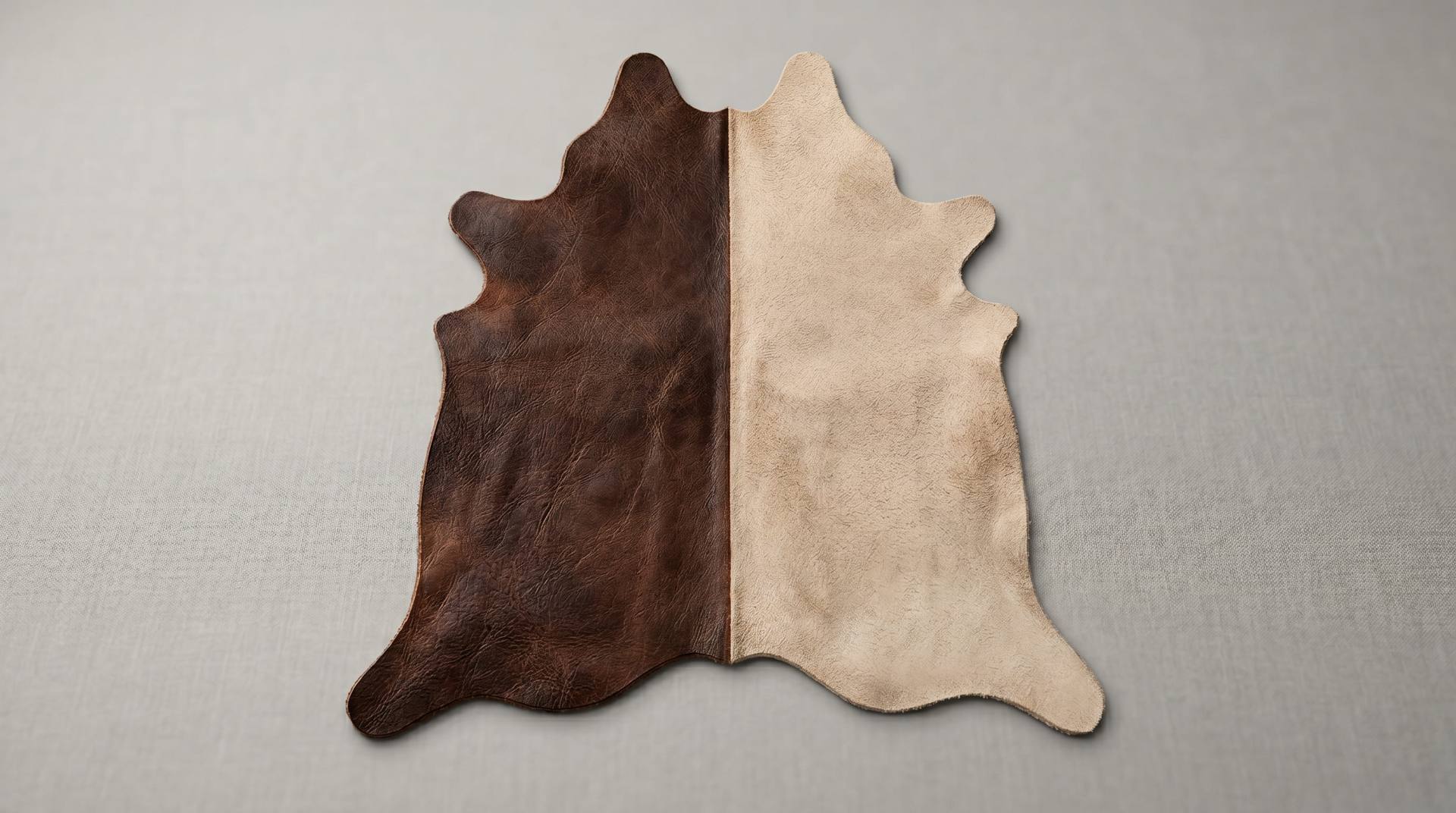
Side leather, or half hide, is one half of a whole hide cut along the backbone line. This format is often easier to handle than a whole hide because it is simpler to store, transport and place on a cutting table.
Side leather works well for footwear, bags, leather goods and accessories. It usually includes part of the central area, side sections and other useful working zones. This allows a maker to combine different parts within one product. A more stable area can be used for parts that must hold shape, while softer areas can be used for secondary or more flexible details.
For smaller workshops, side leather is often a practical compromise. It gives enough usable area without requiring the same cutting organization as a full hide. If you make bags, wallets, shoes or small leather goods, this format can be convenient and economically reasonable.
Bend: The Most Stable Part of the Hide
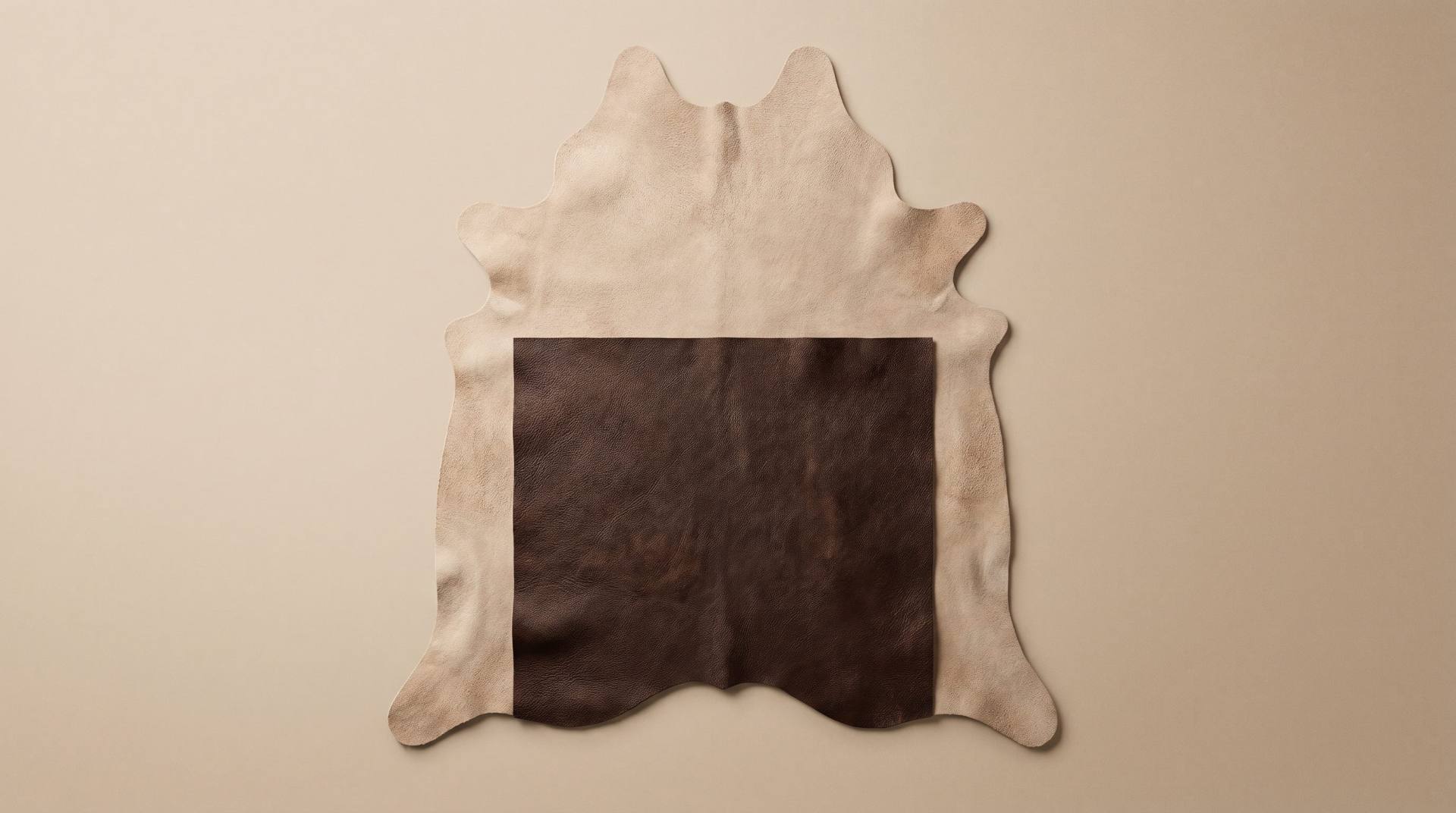
The bend is the central part of the hide. It is often considered one of the most valuable areas for products that require strength, density and shape stability. This zone is closer to the back, so it usually has a more even structure and performs better in parts that carry load.
The bend is suitable for belts, briefcases, dense leather goods, soles, equestrian equipment, harnesses, strap accessories and products where the material should not stretch or lose form. When you hold a good bend in your hands, you can usually feel its firmness and control. It is not as soft as the belly area and it holds a cleaner line.
For belts and harnesses, the bend often performs better than many other hide areas because long narrow parts require stability. If a more elastic part of the hide is used, the belt may stretch faster, and holes for hardware may lose their neat shape. That is why makers often look for dense and stable leather for strap-based products.
Still, the bend is not the right answer for every product. If the item needs to be soft, light and flexible, an overly dense area can make it look and feel too stiff. This is easy to notice in women’s bags or accessories with a soft construction. In such cases, the bend can be useful for selected details, but not always for the entire product.
Bellies: Softer Side Areas
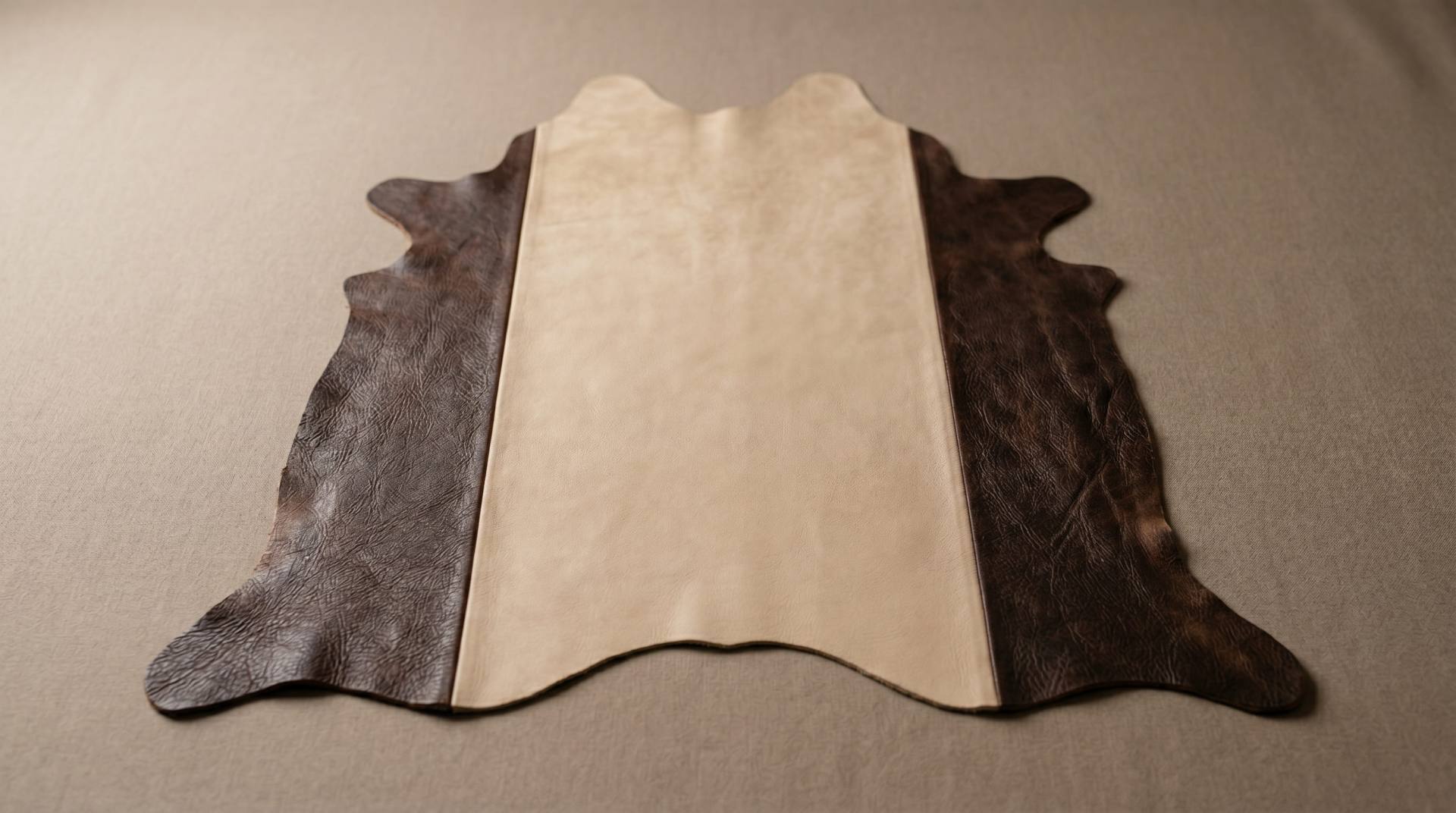
Bellies are the side areas of the hide. They are usually softer, more flexible and less dense than the bend. This does not make them “bad” leather. They simply have a different purpose.
Bellies can work well for clothing, lining, soft bags, small leather goods, decorative details and parts that need flexibility. If the central part of the hide works like a structural base, the bellies can be compared to a softer material for moving and bending areas. They sit better on curves and can be useful where extra stiffness would only get in the way.
A common mistake is using belly leather for products that need firm geometry. For example, a belt or a stiff bag flap made from a very soft belly area may look fine at first, but it can lose shape faster in real use. At the same time, bellies can be very practical for softer parts, lining solutions and smaller details where flexibility is an advantage.
Neck: Natural Texture and Flexible Character
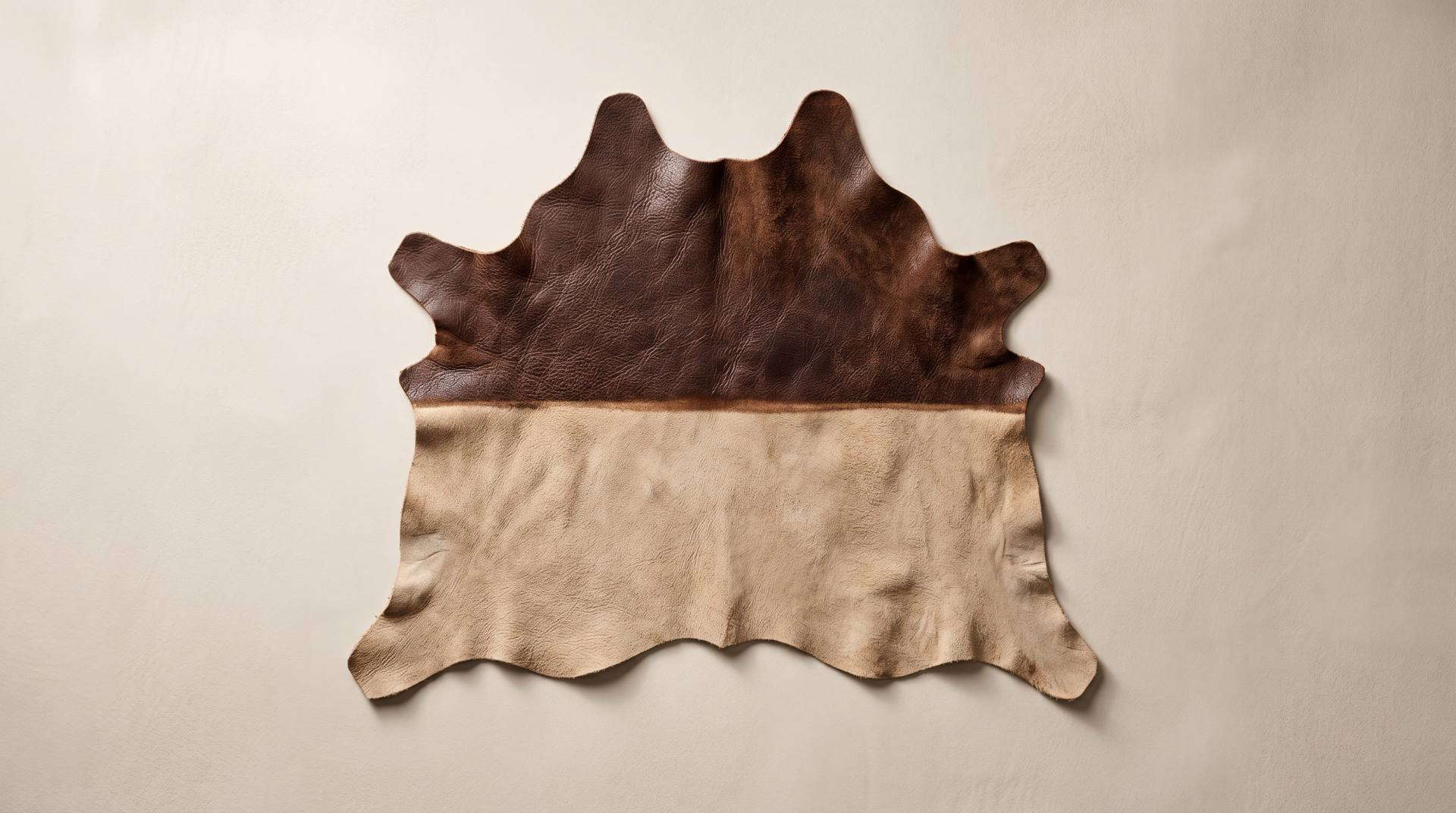
The neck is the front part of the hide, from the neck to the shoulder area. This zone often has natural wrinkles, folds and sometimes uneven thickness. At the same time, it can be strong and flexible.
The neck is often valued for its natural character. If a perfectly calm and even surface is required, it may not be the first choice. But when a maker wants to show the natural look of leather, the grain pattern and the character of the material, the neck can be a very good option.
It is used for bags, decorative elements, belts, footwear parts, vamps, quarters and products where natural texture adds value to the appearance.
There is one important detail when working with neck leather: the cutting layout must be planned carefully. Because of the wrinkles and uneven structure, not every part will behave the same way. But an experienced maker can turn these features into an advantage. In a bag with a strong natural style, the neck can look more expressive and interesting than a very plain, quiet surface.
Croup Area: Dense Rear Part of the Hide
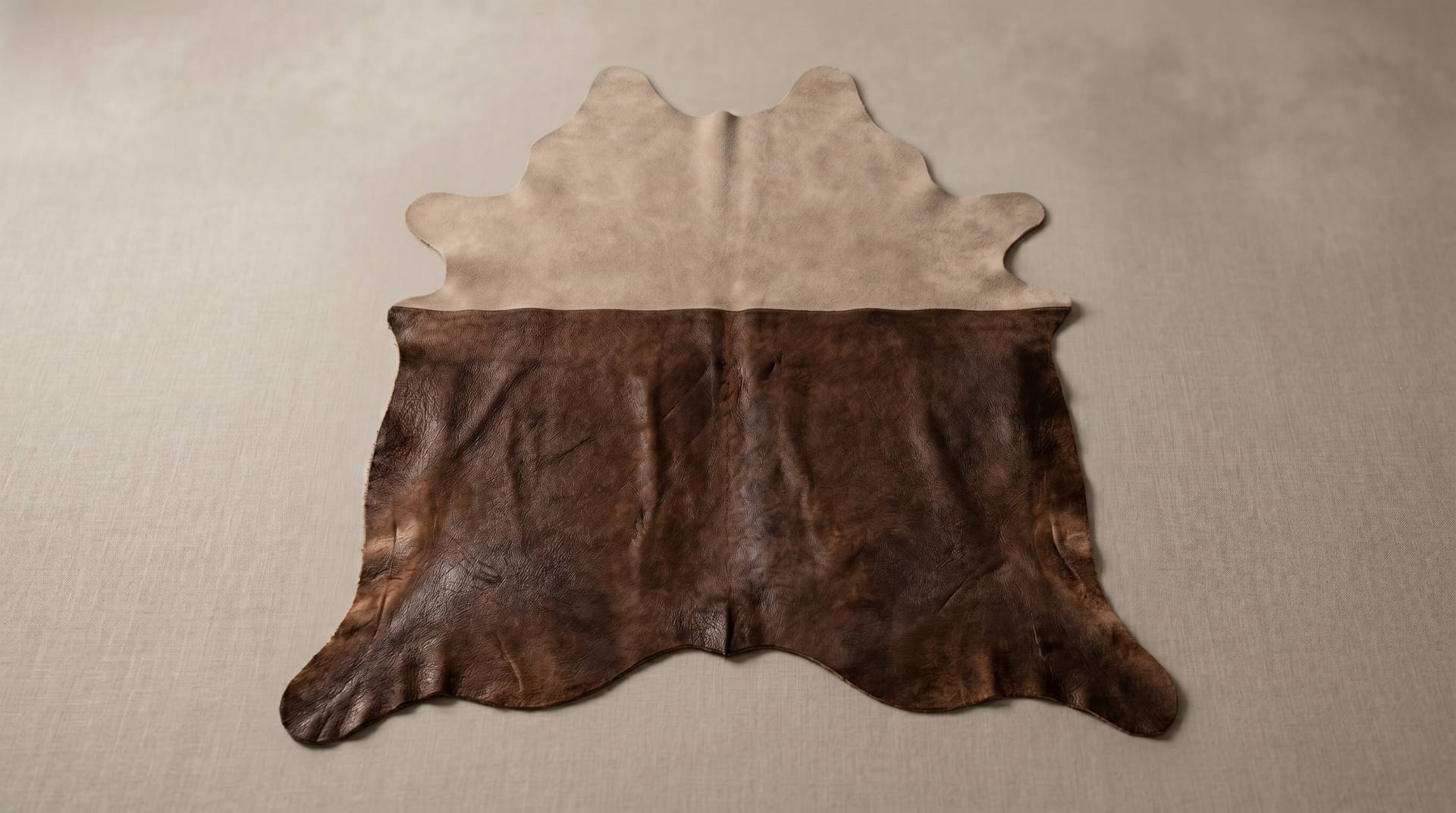
The croup area, sometimes referred to in local production terms as “kulat,” is the rear part of the hide. It is usually dense, springy and wear-resistant, although it can be less uniform than the bend. This area works well where strength and durability are needed.
The croup area can be used for footwear, belts, leather goods and technical products. It is useful in details that need to handle load but do not always require the same level of uniformity as the bend.
Compared with the bend, the croup area may have a little more natural variation. For some products, this is not a problem at all. In technical, workwear or utility items, its density and resistance can be very practical.
Spine Strip: Narrow but Dense
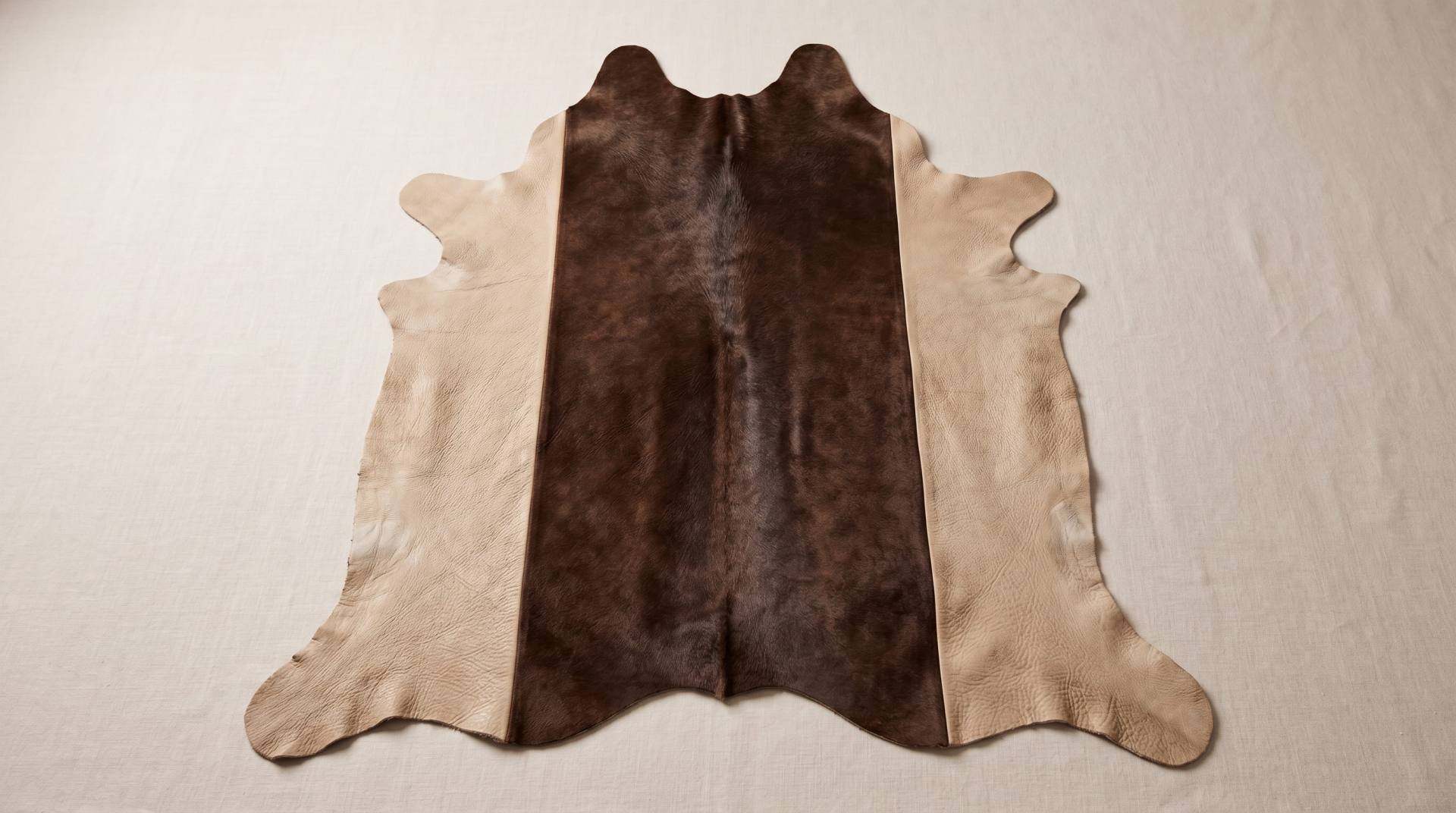
The spine strip, sometimes called “rybka” in local leather terminology, is a narrow strip of leather along the backbone line that may remain after cutting. It is not wide, but it can be quite dense.
Because of its format, it is not usually used for large parts. But it works well for small straps, decorative inserts, technical elements and details that need strength in a narrow shape.
In workshops, the spine strip is often used in a practical way: not for the main large panel, but to avoid wasting useful material. It can become small straps, loops, holders, decorative pieces or technical parts. This is a good example of how understanding leather topography helps use material more efficiently.
How Topography Affects Cutting
Proper cutting of natural leather does not start with a pattern. It starts with looking at the material carefully. A maker needs to understand where the dense central zone is, where the softer side areas are, where folds appear, where the leather stretches more, and where it holds shape.
For long strap details, it is better to choose more stable areas. For soft bag parts, more flexible zones may work well. For decorative details, an area with stronger natural texture can be the right choice. For footwear, it is necessary to understand which parts will bend and which parts must keep structure.
A practical piece of advice: do not judge the hide only by its most beautiful area. In production, the full working surface matters. If you buy leather for a series of products, you need to think not only about the first part you cut, but also about repeatability. A good production result is not one beautiful piece. It is stable behavior across many pieces.
How to Choose a Hide Area for a Product
For belts, harnesses, briefcases and firm leather goods, denser and more stable areas usually work better: the bend, part of the croup area and other strap-suitable zones. For bags, the right choice depends on the construction. If the bag must hold shape, a more stable material is needed. If the model is soft, bellies or other more flexible areas may be suitable.
For footwear, everything depends on the part. Vamps, quarters, counters and decorative elements may require different leather behavior. For furniture and car interiors, surface area, appearance, consistency and the ability of the leather to sit nicely over a surface are especially important.
For handmade products, cutting economy matters as well. A small workshop often works with smaller batches and needs to use each piece wisely. Understanding cattle leather topography helps avoid waste and choose the right part for the right detail.
There is no single “best” hide area for every product. Not every item needs the densest part. Not every soft area is weak. The real task is to match the hide area with the product: its shape, load, flexibility and visual style.
Why Topography Matters When Buying Leather
If you buy natural leather for production, it is better to say right away what you plan to make. For a manufacturer or supplier, this is not an extra detail. It helps select the right material. One simple question — “What product will this leather be used for?” — can save a lot of time and money.
At V-Center, we help choose natural leather based on the future product. For belts and harnesses, we look at stability and density. For bags, we look at the balance between shape and flexibility. For footwear, we consider how different details will behave during wear. For furniture and automotive interiors, we look at surface area, appearance and how the leather works on larger surfaces.
This approach gives better results than choosing only by color or thickness. Color can be seen immediately. Thickness can be measured. But the behavior of leather in the finished product depends on structure, hide area and the correct match between material and task.
Practical Takeaway
Leather topography is not just a technical term for specialists. It affects the quality of finished leather products every day. The bend gives stability and strength. Bellies help where softness and flexibility are needed. The neck brings natural texture and character. The croup area works well where spring, resistance and durability matter. The spine strip is useful for small strap and technical details. Whole hides and side leather give different options for cutting and production planning.
If you work with leather and want a stable result, do not choose the material only by its appearance. Look at which part of the hide it comes from, how it feels in the hand, and which product detail it suits best.
For consultation and natural leather orders, contact the V-Center team. We will help you select leather for your product, production format and required material characteristics.
- Svitlana: +380675119928
- Viktoriia: +380675143576
- Email: vcenter.official@gmail.com
FAQ: Cattle Leather Topographic Areas
What are topographic areas of natural leather?
They are separate areas of a hide that differ in density, thickness, strength, flexibility and behavior during cutting and production.
What is the bend in cattle leather?
The bend is the central part of the hide. It is usually the densest, strongest and most stable area, which makes it suitable for belts, briefcases, harnesses, equestrian equipment and premium leather goods.
What are bellies used for?
Bellies are the side areas of the hide. They are softer and more flexible, so they can be used for clothing, lining, soft bags and small leather goods.
What is the neck area in leather?
The neck is the front part of the hide from the neck to the shoulders. It often has natural wrinkles, expressive texture, enough strength and good flexibility.
How does the croup area differ from the bend?
The croup area is the rear part of the hide. It is dense and wear-resistant, but it may be less uniform than the bend.
What is the spine strip in leather?
The spine strip is a narrow strip of leather along the backbone line. It can be used for small straps, decorative details and technical parts.
What is better for belts: bend or bellies?
The bend is usually better for belts because it is denser and more stable. Bellies may be too flexible for long strap details.
Which hide area is better for bags?
For structured bags, more stable areas are usually better. For soft bags, more flexible areas such as bellies can work well.
Why does leather topography matter in cutting?
Different areas of the hide behave differently. If parts are placed correctly during cutting, the product holds shape better, lasts longer and looks cleaner.
Can one hide area be used for all products?
It can, but it is not always the best choice. Each product should be matched with the right hide area based on shape, load, flexibility and appearance.